
pokeweed look alikes (Phytolacca americana) is one of the most recognizable wild plants in eastern North America. With its striking magenta stems, large leaves, and clusters of deep purple berries, it stands out in late summer and autumn. While many foragers celebrate its young shoots as “poke sallet,” the plant is highly toxic if harvested at the wrong stage or prepared incorrectly.
Making matters worse, several common plants look remarkably similar to pokeweed, especially during the early growth stage. Misidentification can lead to serious illness or worse. This guide will help you confidently distinguish pokeweed from its most common look-alikes.
What Pokeweed Actually Looks Like
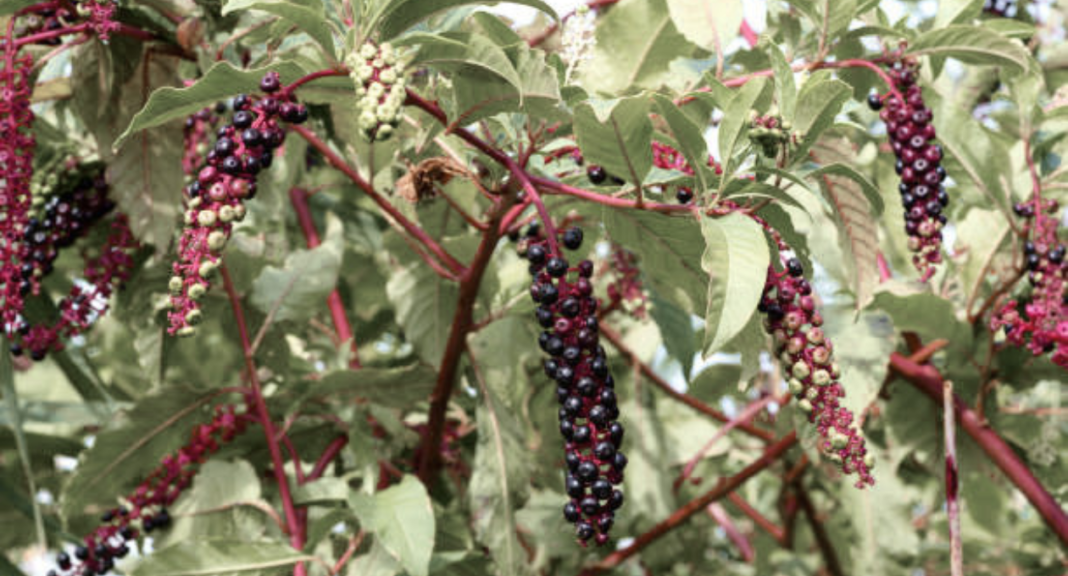
Mature pokeweed grows 4–10 feet tall. It features smooth, succulent stems that transition from green to vivid magenta or red. The leaves are large, alternate, ovate-to-lanceolate, with smooth margins, and can reach 10 inches long. When crushed, the leaves and stems emit a somewhat unpleasant odor.
The most diagnostic feature is the fruit — drooping clusters of dark purple berries on bright pink stems. Each berry contains 8–10 seeds and stains everything it touches a deep red-purple. The plant has a thick, fleshy white taproot that is especially toxic.
Now let’s examine the plants most frequently confused with it.
1. Giant Ragweed (Ambrosia trifida)
This is the most common pokeweed look-alike in disturbed soils and agricultural fields.
Young giant ragweed has large, palmately lobed leaves that look very similar to young pokeweed. Both plants grow aggressively and can appear in the same habitat. However, ragweed leaves are usually more deeply lobed (often with 3–5 distinct lobes) and have a rough, sandpaper-like texture, whereas pokeweed leaves are smoother and have a more uniform shape.
Key differentiator: Ragweed stems are hairy and remain green, while pokeweed develops smooth, bright magenta stems. Ragweed also lacks the purple berry clusters.
2. Elderberry (Sambucus canadensis / S. nigra)
Elderberry seedlings and young shoots are frequently mistaken for pokeweed. Both have compound-looking growth and appear in similar edge habitats.
The critical difference is leaf arrangement. Elderberry has opposite leaves (two leaves grow from the same node across from each other), while pokeweed has alternate leaves (one leaf per node, switching sides as you go up the stem). This is one of the most reliable ways to tell them apart.
Elderberry eventually produces flat-topped white flower clusters and dark berries that grow in upright bunches rather than the drooping chains typical of pokeweed.
3. Castor Bean (Ricinus communis)
Castor bean is a dangerous look-alike, especially in warmer climates. Both plants have large, palmate leaves and reddish-purple stems.
However, castor bean leaves are much more deeply lobed (usually 5–11 lobes) and have serrated edges. The stems are hollow and often have a waxy coating. Most importantly, castor bean produces spiky seed pods rather than smooth purple berries.
Warning: Castor bean seeds contain ricin, one of the most toxic naturally occurring substances. Never confuse the two.
4. American Spikenard (Aralia racemosa)
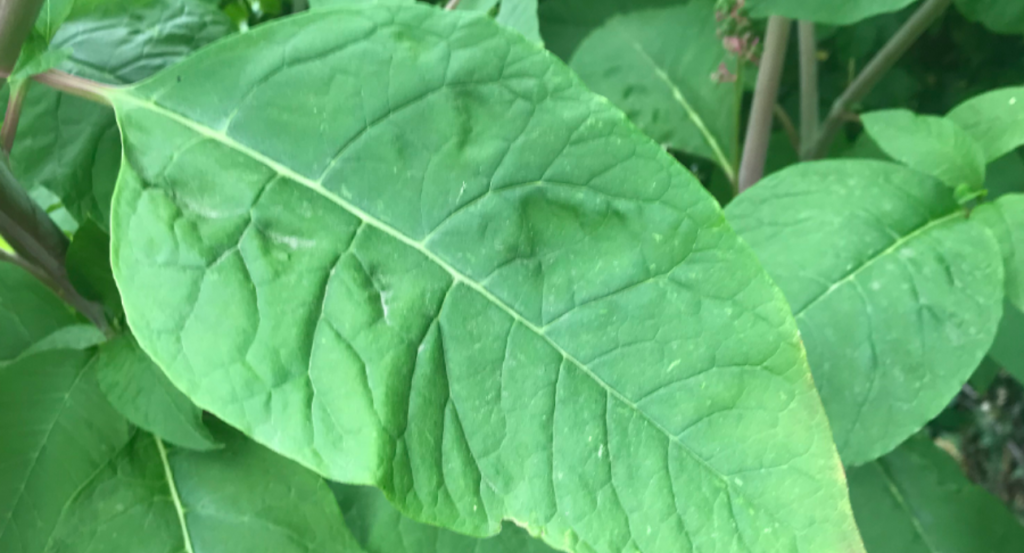
Spikenard is a native woodland plant that shares pokeweed’s preference for rich, moist soil. Its large compound leaves can appear similar from a distance.
Spikenard leaves are doubly compound (leaflets arranged on leaflets), giving them a much more delicate, fern-like appearance compared to pokeweed’s solid, simple leaves. It also produces clusters of dark berries, but they grow on distinctive reddish stalks and the plant has a pleasant aromatic root.
5. Purple-Stem Angelica (Angelica atropurpurea)
This tall member of the carrot family is another purple-stemmed plant that causes confusion. Angelica has thick, smooth, purple stems similar to mature pokeweed.
The difference becomes obvious when examining the leaves — angelica has large, compound leaves with many leaflets, while pokeweed’s leaves are simple. Angelica also produces large umbrella-shaped flower heads (umbels), completely different from pokeweed’s long flower spikes that turn into berry chains.
Quick Identification Checklist
Use this checklist when in doubt:
- Leaf arrangement: Alternate = possible pokeweed. Opposite = definitely not.
- Stem texture: Smooth and succulent = pokeweed. Hairy = likely ragweed.
- Leaf underside: Pokeweed often has a pale or slightly reddish tint along the veins.
- Crush test: Pokeweed leaves have a distinct “green” or slightly sour smell, not aromatic or carrot-like.
- Berry structure: Drooping chains on bright pink stalks = pokeweed.
Should You Eat Pokeweed?
This is perhaps the most important section.
While traditional Appalachian cooks have eaten properly prepared young pokeweed shoots for generations, the plant contains toxic saponins and lectins throughout. The leaves become increasingly toxic as the plant matures and the berries, roots, and seeds are considered dangerous.
Most modern foragers and toxicologists recommend leaving pokeweed alone. The risk of misidentification and improper preparation is simply too high for the small reward.
Final Thoughts
Learning to identify pokeweed and its look-alikes is an essential skill for anyone interested in wild plants. The key is paying close attention to leaf arrangement, stem color and texture, and reproductive structures rather than relying on general “leaf shape.”
When in doubt, take clear photos of the entire plant — including stem attachment points — and consult multiple reliable sources or local foraging experts before touching or tasting anything.
The more you study these plants in all seasons, the easier identification becomes. Pokeweed is a fascinating ecological player that feeds dozens of bird species, but it demands respect and accurate identification.
faqs
Q1: What does young pokeweed look like?
Young pokeweed emerges in early spring as small, bright green shoots with tightly curled leaves. The leaves are oval to lance-shaped with smooth edges. As the plant grows, the stems often turn a striking magenta or reddish-purple. This early stage is when it is most commonly confused with other plants.
Q2: How can I reliably tell pokeweed apart from its look-alikes?
The most important feature is leaf arrangement. Pokeweed has alternate leaves (one leaf per node, alternating sides), while many look-alikes like elderberry have opposite leaves. Other key traits include pokeweed’s smooth (not hairy) magenta stems, simple (not compound) leaves, and long drooping chains of purple berries.
Q3: Is giant ragweed the most common pokeweed look-alike?
Yes. In disturbed soil and gardens, young giant ragweed is frequently mistaken for pokeweed. However, ragweed leaves feel rough like sandpaper, are deeply lobed, and the stems remain green and hairy. Pokeweed stems become smooth and brightly colored.
Q4: Is it safe to touch pokeweed?
For most people, touching the leaves and stems is safe. However, the sap can cause skin irritation or dermatitis in sensitive individuals. Always wash your hands thoroughly after handling the plant. Never touch your eyes or mouth after contact.
Q5: Which parts of pokeweed are poisonous?
All parts of the plant are toxic to varying degrees. The roots, mature leaves, and berries are the most dangerous. The young shoots (under 6–8 inches tall) are the only part traditionally eaten after multiple water changes, but even these carry risk.
Read This: