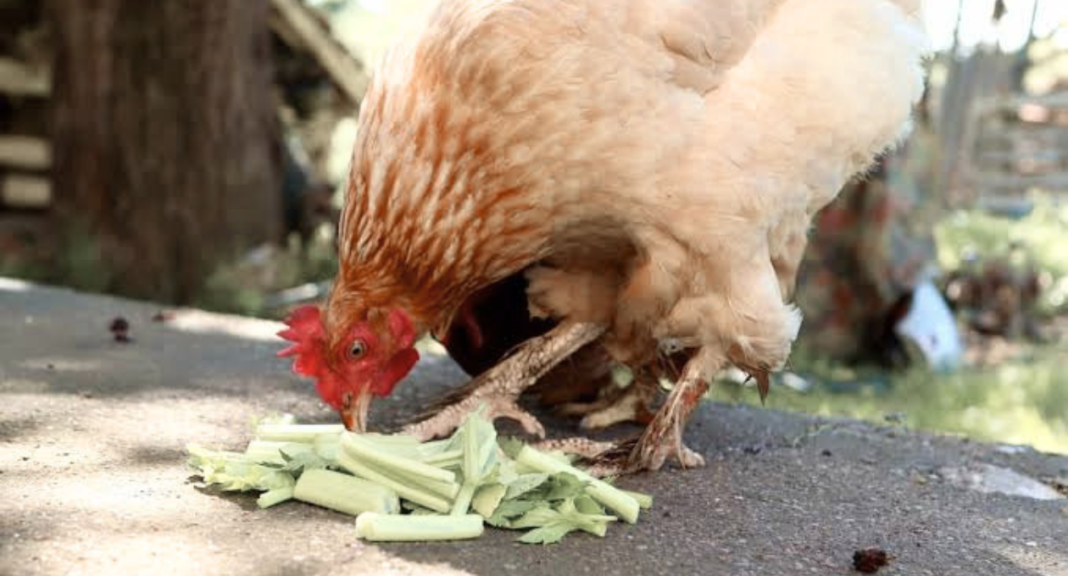

One of the greatest joys of keeping backyard Can Chickens Eat Celery is having a built-in, feathered garbage disposal for your kitchen scraps. When you are prepping dinner and chopping up vegetables, it is second nature to set aside the trimmings for your flock.
When it comes to celery, you almost always end up with leftover leafy tops and that tough white base. Before you toss those scraps into the chicken run, you might find yourself wondering: Can chickens eat celery?
The Nutritional Benefits of Celery for Chickens
Celery is often joked about as having “negative calories” for humans, and while that isn’t entirely true, it is certainly a light, refreshing snack. For chickens, celery offers a fantastic boost of hydration and micronutrients without causing unwanted weight gain (which is a common issue with heavy treats like scratch grains and corn).
Here is what your chickens get when they snack on celery:
- Hydration: Celery is roughly 95% water. This makes it an incredible treat to help prevent heat stress during scorching summer months.
- Vitamin K: Essential for healthy blood clotting and strong bone development, which is especially important for laying hens that use a lot of skeletal calcium to make eggshells.
- Vitamins A and C: Great antioxidants that support your flock’s immune system and respiratory health.
- Potassium and Folate: Important minerals that help regulate fluid balance, muscle contractions, and cellular function.
Which Parts of the Celery Can Chickens Eat?
The great news about celery is that zero-waste is the name of the game. Chickens can safely eat every single part of the plant:
- The Leaves: Don’t throw the leafy tops away! The leaves are actually the most nutritious part of the celery plant, containing the highest concentration of calcium, potassium, and Vitamin C. Because they are soft, they are also the easiest part for chickens to eat.
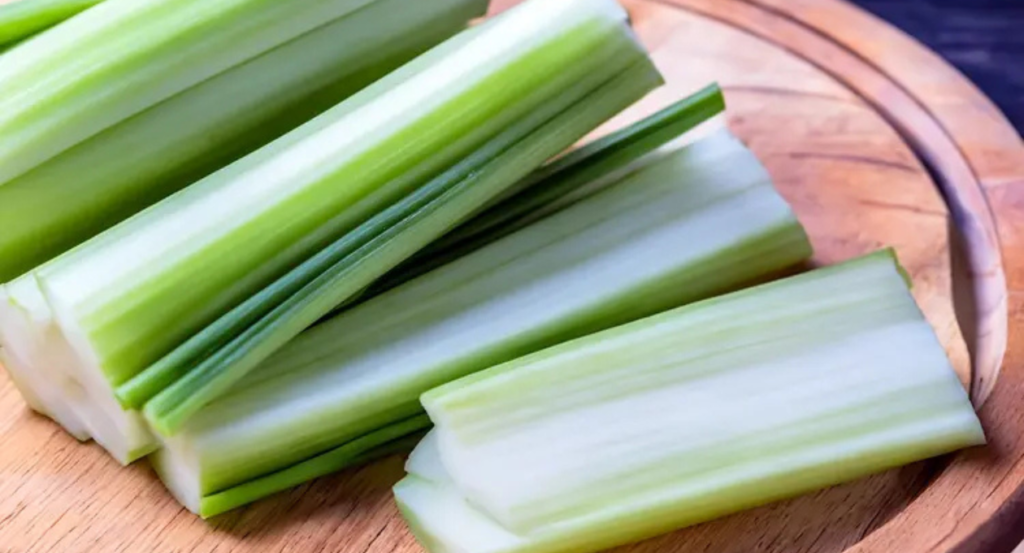
- The Stalks: Chickens love the crunchy texture of the stalks, though they require a little preparation on your part (more on that below).
- The Base (The “Butt”): The tough bottom root end of the celery bunch is completely safe. While it’s too tough for chickens to swallow whole, they enjoy pecking at the center of it for boredom relief.
- Celery Seeds: If you grow celery in your garden and let it bolt, or if you have old celery seed in your spice cabinet (make sure it is plain celery seed, not salty “celery salt”), your chickens can eat the seeds safely.
The Hidden Danger: Celery and Impacted Crops
While celery is completely non-toxic to poultry, feeding long, whole stalks of celery to your chickens can actually be dangerous.
Think about the last time you snapped a piece of celery in half and had to pull those tough, fibrous strings away. Humans have teeth to grind those strings down, and we still get them stuck in our teeth! Chickens do not have teeth. They swallow their food whole, and it travels directly into their crop—a muscular pouch at the base of their neck used for storing food before digestion.
If a chicken swallows long, stringy pieces of celery, those tough fibers can tangle together inside the crop like a ball of yarn. This prevents food from passing through to the stomach and gizzard, leading to a condition called impacted crop (which often turns into a fatal yeast infection known as sour crop).
How to Safely Prepare Celery for Your Flock
Thankfully, preventing an impacted crop is very easy. You just need to do the “chewing” for your chickens before you hand over the treats. Here are the best ways to serve celery to your hens:
1. Chop It Up Fine
Always cut celery stalks horizontally into small, bite-sized pieces—about 1/4-inch to 1/2-inch thick. By cutting across the stalk, you sever those long, tough strings into tiny, manageable fibers that will pass effortlessly through your chicken’s digestive tract.
2. Toss It in the Food Processor
If you have a lot of wilted celery at the bottom of your crisper drawer, toss it into a blender or food processor with a little water. In the summer, you can pour this mixture into muffin tins and freeze it to create hydrating “chicken popsicles.”
3. Cook It Down
If you are making homemade chicken broth with celery, carrots, and onions (hold the salt, and skip the onions if giving scraps to chickens!), you can give the soft, boiled celery to your flock. Cooking breaks down the tough cellulose fibers, making it completely safe and easy to digest. Warm, cooked celery mixed with a little oatmeal is a fantastic winter treat.
4. Always Provide Grit
Whenever your chickens eat fibrous vegetables, greens, or bugs, they need insoluble grit (tiny pebbles or crushed granite). Chickens swallow grit, which sits in their gizzard and acts as their “teeth” to grind up tough food like celery fibers. If your chickens free-range, they likely find enough grit on their own, but coop-kept birds should always have a dish of grit available.
Can Baby Chicks Eat Celery?
If you have a brooder full of fluffy baby chicks, hold off on the celery for a while. Chicks have very delicate digestive systems, and for the first 6 to 8 weeks of life, they need every calorie they consume to come from a nutritionally balanced chick starter feed.
Once your chicks are around 8 weeks old and have consistent access to chick-sized grit, you can introduce celery. Start by only giving them finely minced celery leaves, and gradually introduce finely diced stalks as they grow larger.
Remember the 90/10 Rule
Even though celery is healthy, it is very low in protein and calories. If your chickens fill their crops with watery celery, they won’t have the appetite to eat their commercial layer feed, which can lead to a drop in egg production and nutritional deficiencies.
Always follow the 90/10 rule: 90% of your flock’s diet should be a balanced poultry feed, and treats like celery should make up no more than 10% of their daily food intake. Roughly one to two tablespoons of chopped celery per bird, a few times a week, is plenty!
The Bottom Line
Celery is a wonderful, hydrating, and nutritious treat that your backyard chickens are sure to appreciate—especially on a hot summer afternoon. Just remember to grab a cutting board, chop those stalks into bite-sized pieces to cut the strings, and watch your flock happily gobble up their greens!
Read This: