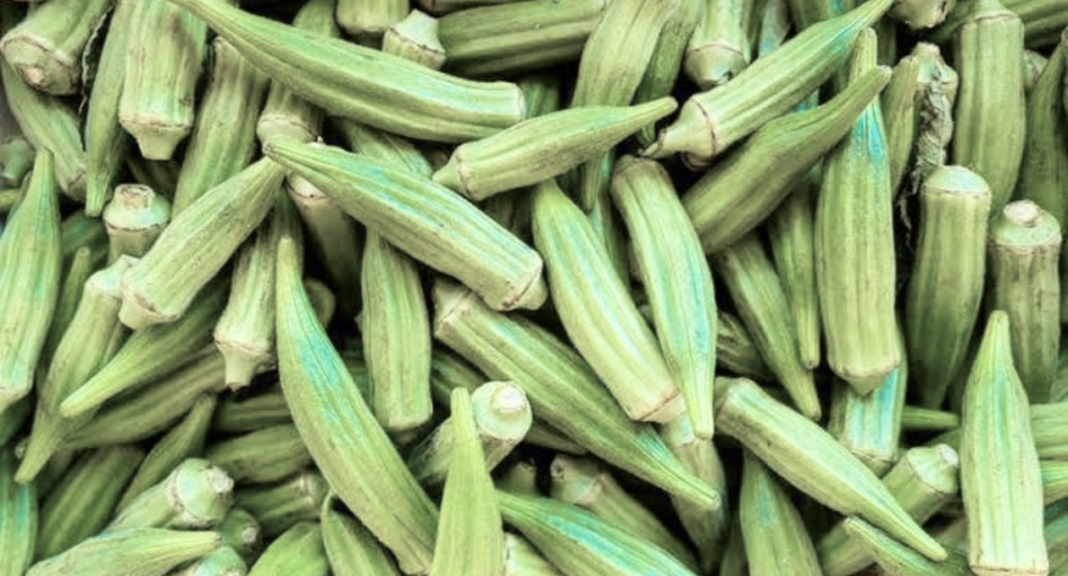

In the past few months, a quiet agricultural crisis has been unfolding across several major economies. Okra, also known as lady’s finger, bhindi, or gumbo, has suddenly become scarce and expensive in many countries. What was once one of the most affordable and nutritious vegetables has now turned into a luxury item in several markets. Prices have surged by 60–120% in India, the United States, parts of Africa, and the Middle East. For millions of households that depend on okra as a dietary staple, this Okra Shortage is more than an inconvenience — it is a serious food security concern.
Why is There an Okra Shortage?
The current okra shortage is not caused by a single factor but by a dangerous combination of climate change, agronomic problems, and market dynamics.
India, which produces over 60% of the world’s okra, has been hit hardest. Erratic monsoon patterns, prolonged dry spells in Rajasthan, Gujarat, and Maharashtra, and excessive rainfall in Andhra Pradesh and Telangana have devastated crops. Okra is highly sensitive to temperature — anything above 35°C (95°F) severely affects flowering and fruit development. The intense heatwaves of 2024 pushed many growing regions beyond this threshold.
Pest attacks have also worsened. The shoot and fruit borer, yellow vein mosaic virus, and powdery mildew have spread rapidly due to changing climatic conditions. Many farmers report losing 40–60% of their crop to these issues.
On the demand side, okra’s popularity has grown significantly. Its reputation as a “superfood” — rich in dietary fiber, vitamin C, K, folate, and antioxidants — has increased its consumption in health-conscious markets. At the same time, export demand from Europe, the Middle East, and the US has remained strong, pulling supply away from domestic markets.
Labor shortages in rural areas have further complicated harvesting. Okra requires frequent picking (every 2–3 days), making it extremely labor-intensive. With younger generations migrating to cities, many farms are simply unable to maintain production levels.
The Impact on Consumers and Industry
The price surge has been brutal. In major Indian cities, okra that usually sells for ₹30–40 per kg is now selling between ₹80–140 per kg. In the Southern United States, fresh okra prices at farmers’ markets have crossed $6–8 per pound in some areas.
Restaurants specializing in Indian, Nigerian, Ghanaian, and Creole cuisine have been forced to either increase menu prices or remove signature dishes like bhindi masala, okra soup, and seafood gumbo. Small vendors and street food sellers, who depend on cheap vegetables, have been hit particularly hard.
For low-income families, especially in rural and semi-urban areas where okra was a cheap source of nutrition, this shortage directly affects dietary quality. Okra’s mucilage (the sticky substance) is highly valued for managing blood sugar levels, making it an important vegetable for diabetic populations in India and Africa.
Is This Shortage Temporary or a Sign of Things to Come?
Many agricultural experts warn that this may not be a one-year anomaly. Okra is a warm-season crop that is extremely vulnerable to climate volatility. As global temperatures continue to rise, such shortages could become more frequent unless serious adaptation measures are taken.
Progressive farmers are already shifting toward protected cultivation (polyhouse and shade net farming), which gives much better yields and protects against extreme weather. However, the high initial investment makes it difficult for small and marginal farmers — who grow most of India’s and Africa’s okra — to adopt these technologies.

What Can Be Done?
For Governments:
- Provide subsidies for climate-resilient okra varieties
- Expand drip irrigation and protected cultivation schemes
- Create buffer stocks of okra during peak season
- Invest in research for virus-resistant and heat-tolerant hybrids
For Farmers:
- Adopt integrated pest management
- Practice crop rotation and intercropping
- Use mulching to conserve soil moisture
- Consider staggered sowing to extend the harvesting window
For Consumers:
- Grow okra at home — it is one of the easiest vegetables to grow in pots and small gardens. A single plant can yield 3–5 kg of okra over its lifetime.
- Support local farmers through farmers’ markets and CSAs (Community Supported Agriculture).
- Freeze fresh okra during season for year-round use.
- Explore suitable substitutes such as cluster beans, ridge gourd, or zucchini in certain recipes when okra is prohibitively expensive.
The Way Forward
The okra shortage of 2024 should serve as a wake-up call. In our rush toward staple grains and high-value cash crops, we have neglected nutrient-dense vegetables that play a critical role in both food security and nutrition.
Okra is more than just a vegetable. It is a resilient, fast-growing, high-yielding crop that can help fight malnutrition if supported properly. The current crisis reveals deep cracks in our food systems — over-dependence on rain-fed agriculture, lack of climate-smart practices, and insufficient investment in vegetable crops.
As consumers, we must become more conscious of where our food comes from and support sustainable agricultural practices. For farmers, this is a difficult period, but it may also accelerate much-needed modernization in okra cultivation.
The next few months will be critical. If the 2025 summer crop fails again, we could be looking at a structural shortage rather than a temporary one. The time to act — through policy, technology, and consumer behavior — is now.
By protecting and promoting crops like okra, we are not just saving a vegetable. We are preserving biodiversity, nutrition security, and the livelihood of millions of small farmers who depend on it.
Read This:
Fuzzy Fruits