
Introduction
When we think of flowers, images of delicate roses, vibrant tulips, and elegant lilies usually come to mind. But not every flower is beautiful. Some look like they were designed in a nightmare. After years of debate among botanists, travelers, and plant enthusiasts, one flower consistently takes the crown as the ugliest in the world: Rafflesia arnoldii, commonly known as the Ugliest Flower or Stinking Lily.
This parasitic monster doesn’t just look hideous — it smells like rotting flesh. Growing up to three feet across and weighing nearly 25 pounds, Rafflesia arnoldii holds the record for the largest individual flower on Earth. Yet its grotesque appearance and foul odor make it something most people would rather see in a horror movie than in real life.
In this article, we explore why this flower is considered the ugliest, how it survives, its bizarre life cycle, and other strong contenders for the title. Prepare yourself — beauty is not on the menu.
Why Rafflesia arnoldii Is So Ugly
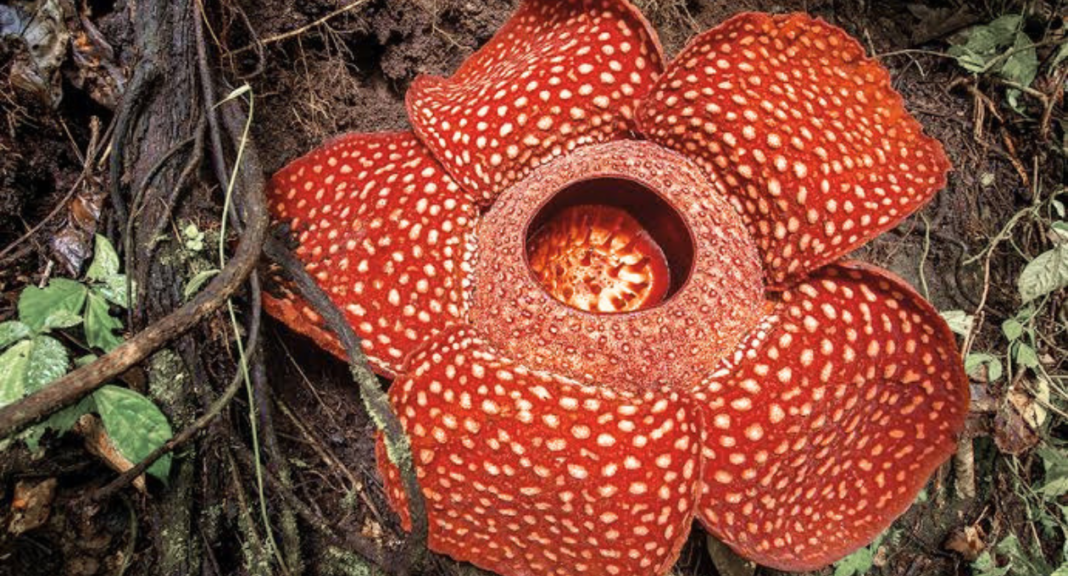
The first thing you notice about Rafflesia is that it has no stem, no leaves, and no roots of its own. It lives as a parasite inside the vines of the Tetrastigma plant in the rainforests of Sumatra and Borneo. When it finally blooms, it explodes into a massive, fleshy, reddish-brown structure that looks disturbingly like an open wound or a pile of decaying meat.
Its five thick, leathery petals are covered in pale bumps that resemble warts. The center contains a giant sunken cavity filled with spikes. To top it off, the flower emits a powerful stench of rotting flesh and sewage that can be smelled from nearly a mile away. This is no accident. The smell is specifically evolved to attract carrion flies and beetles, which pollinate the flower while searching for dead animals to lay eggs on.
Unlike most flowers that bloom for weeks, Rafflesia flowers last only 5 to 7 days before turning black and collapsing into a slimy mess. Its sheer size, fleshy texture, disturbing color, and revolting smell make it the clear winner in any “ugliest flower” contest.
The Science Behind the Ugliness
Rafflesia’s strategy is a masterclass in evolutionary biology. Most flowers use bright colors and sweet scents to attract bees and butterflies. Rafflesia uses “sapromyophily” — the pollination syndrome that mimics carrion to lure flesh-eating insects.
Because it lives entirely inside another plant for most of its life, it doesn’t need chlorophyll or leaves. This makes the sudden appearance of its giant bloom even more shocking. Scientists have described the experience of seeing one in the wild as both fascinating and deeply unpleasant.
Climate change and deforestation now threaten Rafflesia’s survival. It is extremely difficult to cultivate outside its natural habitat, making it one of the rarest and most endangered plants on Earth.
Other Strong Contenders for Ugliest Flower
While Rafflesia takes first place, several other flowers give it serious competition:
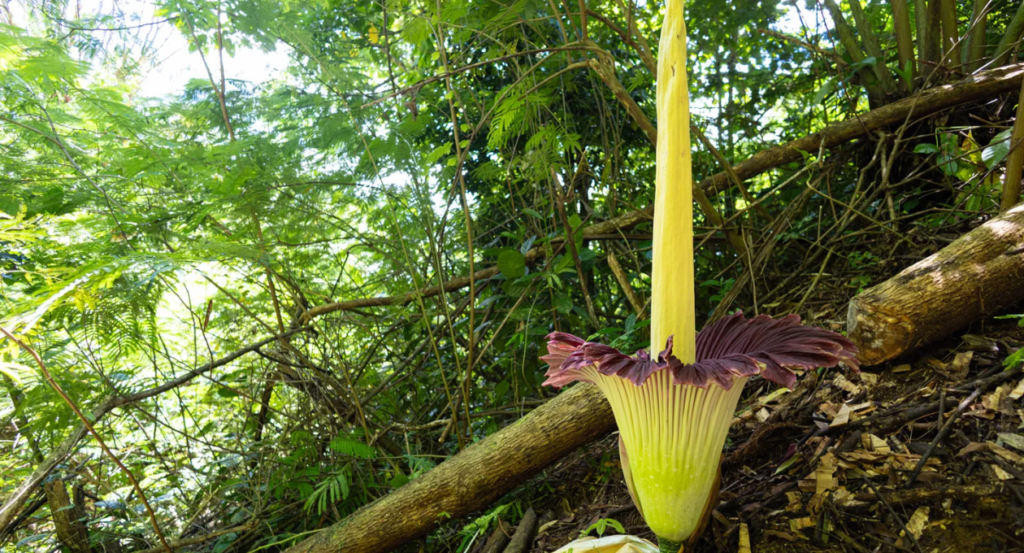
- Titan Arum (Amorphophallus titanum): Also called the Corpse Flower, this Indonesian giant can grow 10 feet tall. Its purple, phallic spadix and sickly yellow spathe produce an equally horrible rotting smell. Many people find its shape even more disturbing than Rafflesia.
- Stapelia (Carrion Flower): These South African succulents produce star-shaped, hairy flowers that look like raw meat. Their smell is so bad that some species are nicknamed “Toad Plant.”
- Hydnora africana: This bizarre flower looks like a alien mouth emerging from the ground. It has no leaves and traps beetles inside its fleshy “jaws” until pollination is complete.
- Dracunculus vulgaris (Dragon Arum): Often called the “Voodoo Lily,” it features a long black spike surrounded by a deep purple spathe and smells like decaying meat.
These flowers prove that nature doesn’t always aim for beauty. Sometimes the goal is pure shock value.
What We Can Learn From Ugly Flowers
The existence of these repulsive blooms challenges our idea of what makes something valuable in nature. While we celebrate roses and cherry blossoms, these “ugly” flowers play vital roles in their ecosystems. They support specialized pollinators and demonstrate the incredible diversity of survival strategies.
In recent years, the Corpse Flower has become a strange celebrity. Botanical gardens that manage to bloom one report huge crowds. People wait hours in line just to get a whiff of the terrible smell. Social media has turned these ugly flowers into viral sensations, proving that even the ugliest things can capture human fascination.
Final Thoughts
Rafflesia arnoldii stands alone as the ugliest flower in the world — a parasitic, flesh-colored, foul-smelling giant that looks like it crawled out of a science fiction film. Its grotesque beauty reminds us that nature is not here to please human eyes. Evolution cares only about survival, and sometimes survival looks like a rotting dinner plate the size of a bicycle wheel.
The next time someone says all flowers are beautiful, show them a picture of Rafflesia. It might just change their mind.
If you ever get the rare chance to see one blooming in the wild, consider yourself lucky — even if you have to pinch your nose the entire time. In its own repulsive way, this ugly flower is one of nature’s most impressive achievements.
Faqs
Q1: What is the ugliest flower in the world?
Most botanists, travelers, and plant enthusiasts agree that Rafflesia arnoldii (also known as the Corpse Flower or Stinking Lily) is the ugliest. It produces a massive, fleshy, reddish-brown bloom that looks like rotting meat, complete with wart-like bumps and a sunken center full of spikes. Its revolting appearance and smell make it the clear winner in any “ugliest flower” contest.
Q2: Why does Rafflesia smell so terrible?
The flower emits a powerful stench of rotting flesh and sewage to attract carrion flies and beetles. This is an evolutionary strategy called sapromyophily. The insects think they’ve found a dead animal to lay eggs on, and while they search, they end up pollinating the flower. The smell can be detected from nearly a mile away.
Q3: How big is Rafflesia arnoldii?
It holds the record for the largest individual flower on Earth. When fully open, it can reach up to 3 feet (1 meter) in diameter and weigh as much as 25 pounds (11 kg). Despite its size, it has no stem, no leaves, and no roots of its own.
Q4: What’s the difference between Rafflesia and the Titan Arum?
Both are called “Corpse Flower” and both smell awful, but they are unrelated. Rafflesia produces a single giant ground-level flower. The Titan Arum (Amorphophallus titanum) grows up to 10 feet tall with a tall central spike and a surrounding purple sheath. Many people find the Titan Arum’s shape even more disturbing than Rafflesia.
Q5: Where can you see Rafflesia in the wild?
Rafflesia is native to the rainforests of Sumatra, Borneo, and parts of Peninsular Malaysia and Thailand. The best places for sightings are Gunung Gading National Park in Malaysia and parts of Sumatra. However, the flower is unpredictable and only blooms for 5–7 days after years of hidden growth inside its host vine.
Read This: