
Foragers, herbalists, and wild plant enthusiasts hold Common Mullein (Verbascum thapsus) in high regard. Known for its tall flower spikes and incredibly soft, flannel-like leaves, this biennial herb has been used for centuries to support respiratory health, reduce inflammation, and soothe earaches. However, correct identification is critical. Several plants closely resemble mullein look alikes, especially during its first-year rosette stage, and some are toxic.
What Common Mullein Actually Looks Like
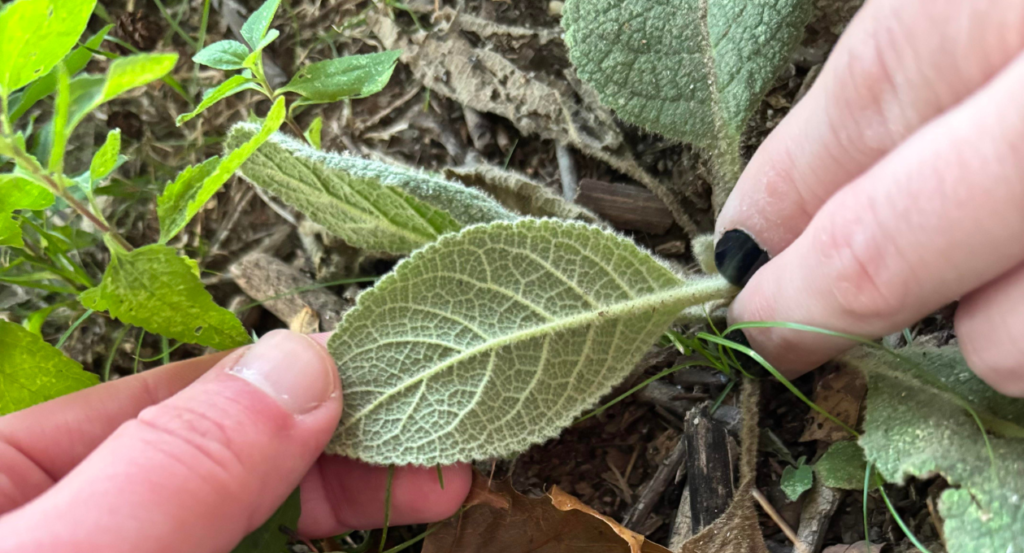
In its first year, Common Mullein grows as a low-to-the-ground basal rosette. The leaves are large (up to 12–16 inches long), oblong to lance-shaped, and have a distinct bluish-green color. Most importantly, they are covered in dense, star-shaped hairs that give them a soft, velvety, almost silvery appearance. If you rub the leaf, it feels like thick flannel.
In its second year, the plant sends up a single tall, sturdy flower stalk that can reach 4 to 8 feet high. The stem is also densely hairy. The flowers are bright yellow, five-petaled, and grow in a long, dense spike at the top. The leaves on the flowering stalk become smaller and more triangular as they move upward.
Mullein prefers disturbed soil, roadsides, pastures, and sunny open areas. It is extremely drought-tolerant.
Dangerous Look-Alike: Foxglove (Digitalis purpurea)
This is the most important look-alike every forager must know.
Similarities: In its first year, foxglove produces a basal rosette with large, soft, oblong leaves that can appear somewhat fuzzy.
Key Differences:
- Foxglove leaves have a much smoother, thinner texture compared to mullein’s thick, felt-like woolliness.
- The underside of foxglove leaves often has prominent net-like veins.
- Foxglove leaves usually have scalloped or toothed edges, while mullein leaves have finely crenate (rounded) teeth or almost smooth margins.
- Foxglove leaves are typically darker green and lack the silvery, hairy “flannel” look of mullein.
- Second-year foxglove produces purple, pink, or white bell-shaped flowers on a tall stalk — completely different from mullein’s yellow flowers.
Warning: Foxglove contains cardiac glycosides. Even small amounts can cause severe heart irregularities, nausea, and death. Never consume any plant that even remotely resembles mullein unless you are 100% certain.
Look-Alike Comfrey (Symphytum officinale)
Comfrey is another frequent source of confusion, especially in early spring.
Similarities: Both have large, hairy basal leaves and like rich soil.
Key Differences:
- Comfrey leaves are narrower, more elongated, and have a rough, sandpaper-like texture rather than mullein’s soft velvet.
- Comfrey leaves attach directly to the stem and often run down it (decurrent), while mullein leaves have distinct petioles (leaf stalks) in the rosette stage.
- Comfrey flowers are usually purple, pink, or white and hang in clusters, unlike mullein’s tall yellow spike.
- Comfrey has a characteristic cucumber-like smell when the leaves are crushed.
While comfrey is used medicinally (mostly externally), it contains pyrrolizidine alkaloids that can be toxic to the liver if taken internally in large amounts.
Look-Alike Burdock (Arctium minus or Arctium lappa)
First-year burdock rosettes are sometimes mistaken for mullein by beginners.
Similarities: Both have large basal leaves and grow in similar disturbed habitats.
Key Differences:
- Burdock leaves are much thinner and less hairy, with a matte rather than velvety finish.
- The underside of burdock leaves is distinctly pale and woolly, while the top is green and relatively smooth.
- Burdock leaves have wavy, coarsely toothed margins and a more heart-shaped or triangular base.
- Crushed burdock leaves have almost no scent, while mullein has a faint, slightly sweet herbal aroma.
Burdock is edible and medicinal (great for the lymphatic system), but the roots are the primary part used.
Look-Alike Elecampane (Inula helenium)
Elecampane leaves can look similar from a distance.
Similarities: Large, slightly fuzzy basal leaves.
Key Differences:
- Elecampane leaves are much coarser and feel somewhat leathery.
- The underside is covered in dense, short white hairs that look felt-like, but the top surface is usually rough and green.
- The leaves have a distinct resinous, aromatic smell when crushed — almost like camphor or maple syrup.
- Flowers are bright yellow but daisy-like with many thin petals, quite different from mullein’s simple five-petaled flowers.
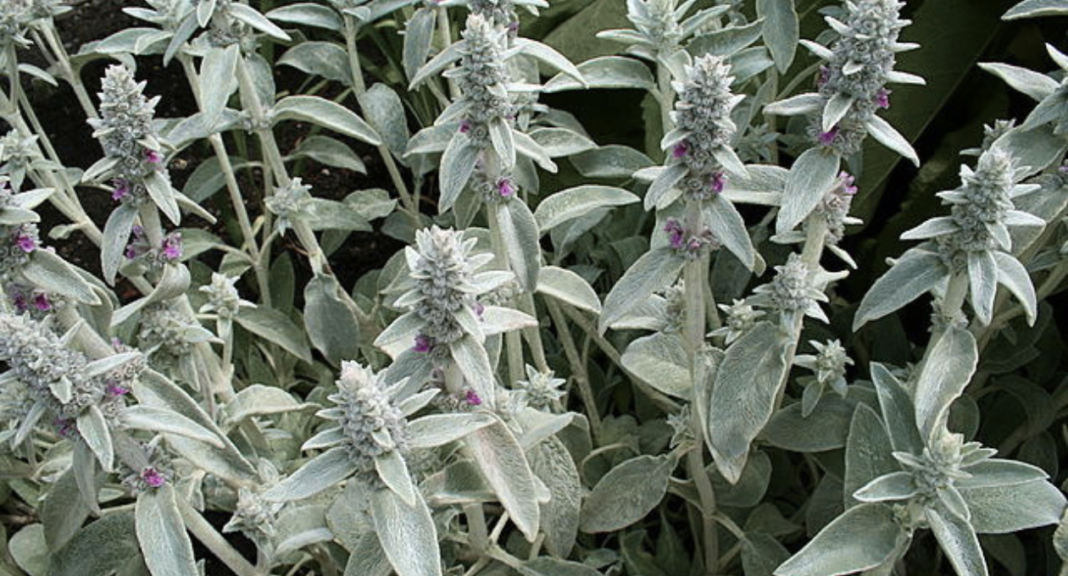
Look-Alike Lamb’s Ear (Stachys byzantina)
This ornamental garden plant is extremely common and often escapes into the wild.
Similarities: Extremely soft, silvery, fuzzy leaves.
Key Differences:
- Lamb’s Ear leaves are much smaller, more oval or tongue-shaped, and grow in dense clumps rather than a single large rosette.
- The plant stays low to the ground and rarely produces a tall flower spike like mullein.
- Flowers are purple and grow on shorter stalks.
Lamb’s Ear is generally considered safe but has limited medicinal use compared to mullein.
Pro Identification Tips
- The Touch Test: True mullein feels like warm flannel or lamb’s wool. Very few look-alikes match this exact softness.
- Leaf Thickness: Mullein leaves are unusually thick and substantial.
- Growth Habit: Mullein is strictly biennial. It spends its first year as a rosette and its second year bolting into a tall stalk. It almost never branches.
- Flower Color: Yellow flowers on a tall unbranched spike are diagnostic for Common Mullein.
- Stem: The flowering stem is noticeably winged and very hairy.
Final Thoughts
Learning to identify Common Mullein and its look-alikes is an essential skill for anyone interested in wild medicine. While most look-alikes are relatively harmless, foxglove can be deadly. When in doubt, take clear photos of both the top and bottom of leaves, note the habitat, and consult multiple reliable sources before harvesting.
The golden rule of foraging remains: If you’re not 100% certain, don’t consume it.
With practice, you’ll soon recognize mullein’s unique velvety texture from several feet away. This magnificent plant is well worth the effort to learn properly.
Read This: